

Custom ShopifyStreetwear & Apparel
3012 Fashion
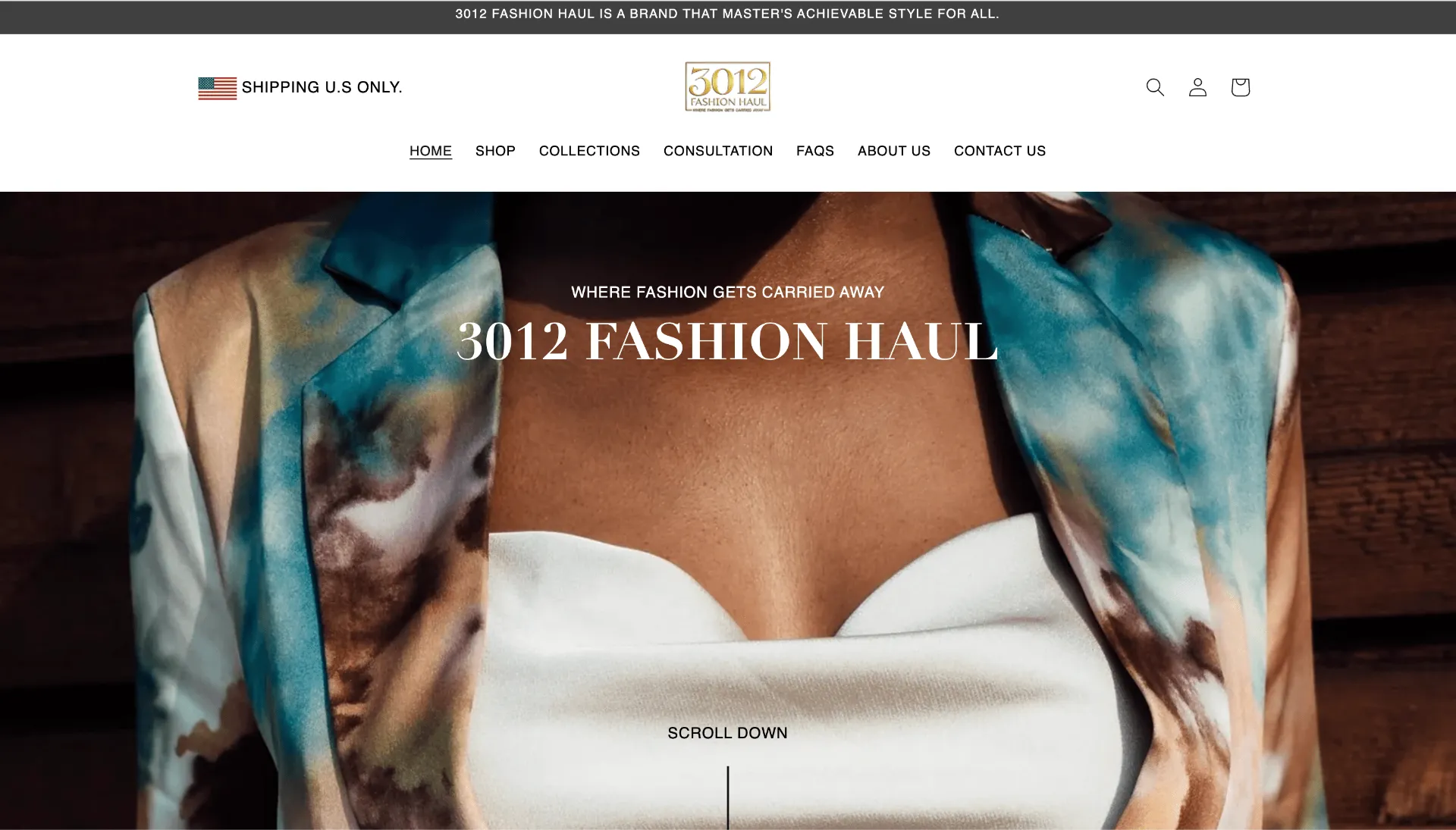
Streetwear and apparel e-commerce built on Shopify with a focus on product presentation and mobile shopping.
Visit Website ↗Shopify Web Design · Alaska
People don't experience your Shopify store as software. They experience the brand.
The photography. The product page. The way collections are organized. How quickly they understand what they're buying. How easy it is to purchase from a phone.
We build Shopify stores around the customer experience first, then make the technology support it.
Custom Shopify · Product experience · Mobile commerce · Built for growth
Built from Anchorage. Serving Alaska brands and select e-commerce businesses nationwide.
Mandeaux Digital designs custom Shopify websites for brands whose primary website goal is selling products online.
Our Shopify work focuses on brand presentation, product discovery, merchandising, mobile shopping, conversion paths, search-ready structure, and the systems surrounding the customer experience.
We recommend Shopify when e-commerce is central to the business rather than trying to force every website onto the same platform. For an Alaska brand selling beyond its immediate market, Shopify can remove geography from the customer equation. We build Shopify experiences from Anchorage for brands selling across Alaska, the Lower 48, and beyond.
Customers make dozens of tiny decisions before they ever reach checkout. Does this brand feel credible? Can I find the right product? Do I understand the difference between these options? What size do I need? Can I trust the quality? How long will shipping take? What happens if it doesn't work for me?
A strong Shopify store answers those questions without making the customer work for them.
The right website investment becomes much easier to understand when you stop thinking about features first. We evaluate four things.
Desire
Design, photography, messaging, brand context, and product presentation shape perceived value before price is ever evaluated. A premium product presented like a commodity usually gets treated like one.
Discovery
Collections, navigation, filters, search, product organization, and merchandising determine whether shoppers move deeper into the store or leave. A growing catalog needs more than a grid.
Confidence
Product details, sizing, materials, reviews where appropriate, policies, shipping information, imagery, FAQs, and brand credibility all reduce uncertainty. Good product pages answer questions before the customer has to ask them.
Conversion
Mobile usability, page speed, cart behavior, checkout flow, payment options, shipping clarity, and unnecessary steps all influence whether the customer completes the purchase.
A product page has one job: help the customer make a confident buying decision. That means balancing persuasion with information.
This section explains the thinking. Not every project includes the same product page components.
The customer shouldn't need to leave the product page to understand the product.
Mobile e-commerce is not desktop design squeezed into a smaller screen. Navigation changes. Product imagery changes. Spacing changes. Filters change. Buttons change. Information hierarchy changes.
The buying experience has to be designed intentionally for the device where customers are actually shopping.
Mobile isn't the second version. It's often the primary shopping experience.
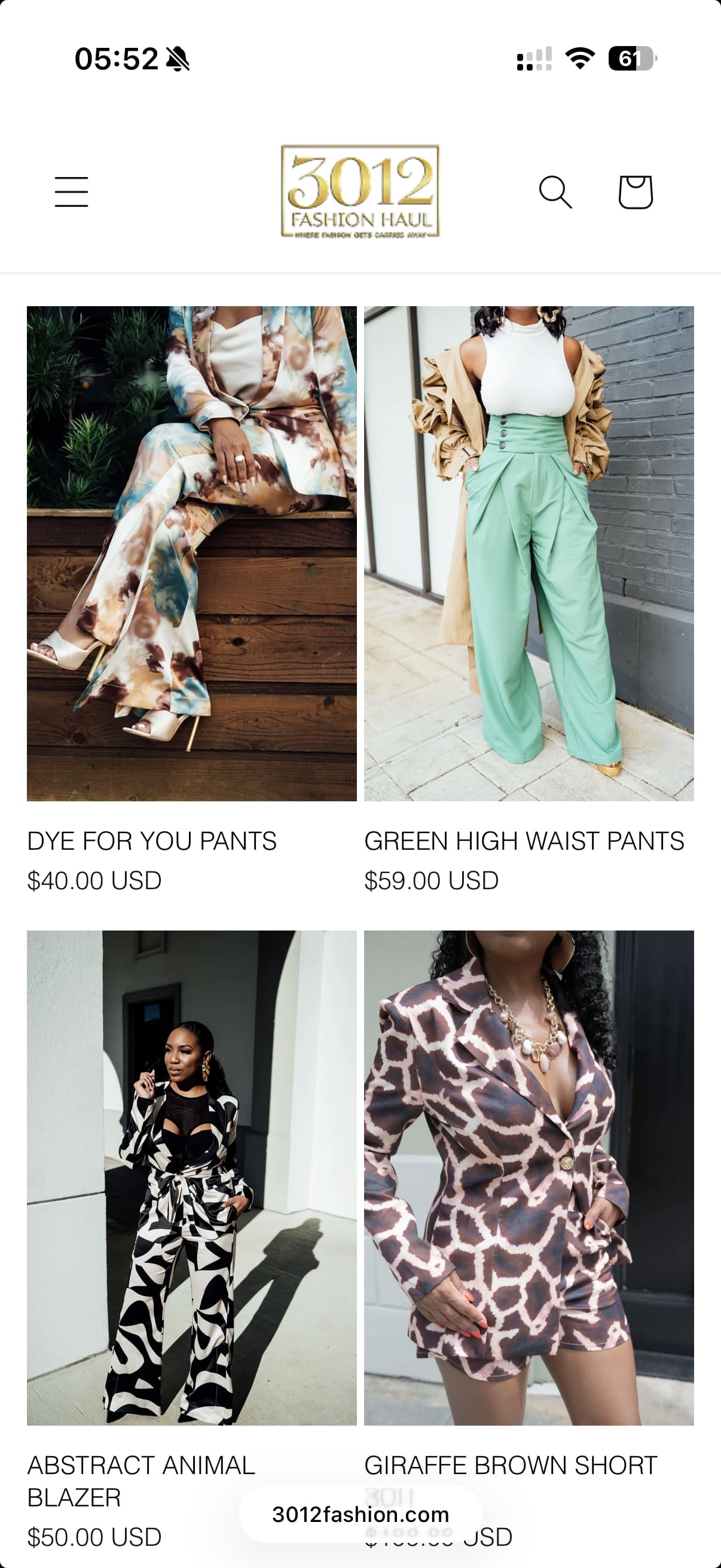
As product catalogs grow, organization becomes part of conversion. Customers need help finding what matters to them.
Available functionality depends on scope and platform configuration. We explain what's possible for your specific build during project scoping.
E-commerce creates a strange challenge. The customer may never touch the product before paying for it. That means the website has to carry more of the trust.
Photography. Story. Design. Details. Positioning. Consistency. All of it shapes whether the customer believes the product is worth the price.
Mandeaux.com — E-Commerce
Before Mandeaux Digital, there was Mandeaux. Mandeaux started in Anchorage in 2019 as a luxury brand and grew into an international business serving customers in more than a dozen countries.
That meant learning e-commerce from the operator side. Product presentation. Brand perception. Content. Customer acquisition. Merchandising. Trust. Shipping. Customer experience. And the constant work of turning attention into orders.
We're not looking at your store only as designers. We're looking at it as people who understand what it feels like when the website has to sell the product.
Shopify stores need strong search architecture too. That includes how collections are structured, products are categorized, titles are written, descriptions are organized, internal links connect products and categories, metadata is handled, technical crawlability is managed, duplicate URLs are controlled, and content supports commercial pages.
How collections are structured and how products are grouped for both customers and search systems.
How products are categorized, titled, described, and related to each other.
Metadata, crawlability, mobile behavior, canonical handling, sitemaps, and indexation readiness.
Intentional connections between products, collections, and supporting content that distribute context.
Guides, buying advice, and educational content that help products rank and help customers decide.
Appropriate schema to help search systems identify product, offer, and collection information.
We don't claim that Shopify automatically ranks. We don't guarantee rankings. We don't imply that product schema guarantees rich results. We build to improve machine understanding and search readiness.
Some customers need education before they need a checkout button. Guides. Comparisons. Buying advice. Sizing information. Use cases. Care instructions. Stories.
Search-driven content can introduce a customer to the brand before they're ready to choose a product.
The first order is important. What happens after it matters too. Depending on the business and systems involved, customer information and marketing workflows can connect to the broader Mandeaux ecosystem for follow-up, communication, reviews, segmentation, and future campaigns.
We're careful not to overstate what any single platform can do natively. Supported integrations, customer communication, and follow-up workflows are confirmed during planning rather than assumed.
Best when
You need a focused professional web presence and e-commerce is not the primary job of the website.
Best when
Your website centers around services, content, SEO depth, custom functionality, or more complex business information.
Best when
Selling products online is the primary job of the website.
The platform follows the business model. Not the other way around.
Many Shopify projects begin with something that already works. Products exist. Customers exist. Traffic exists. Orders exist.
But the store no longer matches the brand, the catalog has become difficult to navigate, the mobile experience is weak, or the design hasn't kept pace with the business. We evaluate what should stay and what needs to change.
We don't promise that every app, customization, or historical feature can be migrated unchanged. Migration scope is evaluated against the existing environment before anything is committed.
We learn the brand, products, customers, pricing, catalog, positioning, traffic sources, current store, operational requirements, and growth plans.
We determine navigation, collections, product relationships, search and filter needs, content, conversion paths, mobile behavior, and required functionality.
We establish the visual system, product presentation, photography strategy, brand treatment, information hierarchy, and interaction.
We build the Shopify experience around the approved structure and creative direction.
We test desktop, mobile, navigation, product variants, cart, checkout path, forms, links, tracking, SEO setup, and performance.
We launch carefully and support the store according to the applicable project and service arrangement.
We don't state universal turnaround times. Timeline depends on the scope of the build, the catalog, the integrations involved, and what the store needs to accomplish.
This section explains what a custom Shopify build can support depending on scope. Not every project includes every capability, and Shopify plan limitations may affect what's possible. We confirm scope during planning rather than assuming.
3012 Fashion
Streetwear and apparel e-commerce built on Shopify with a focus on product presentation and mobile shopping.
Visit Website ↗A ten-product brand and a store with hundreds of products, subscriptions, filters, integrations, migration requirements, and custom functionality are not the same project.
We scope Shopify builds around catalog size, design requirements, content, migration, apps, integrations, product complexity, custom development, search architecture, and business requirements.
We don't publish a pretend one-size-fits-all custom Shopify package.
How Much Does a Business Website Cost in Alaska? (2026 Pricing Guide)
Coming soon — the guide will be linked here once published.
Not ready to hire us?
If you want to talk through your business, brand, website, offer, or next move before committing to a larger project, book a private 60-minute business consultation with Aaron Sharp.
Current rate: $250 / 60 minutes
Paid strategic consulting. Separate from the free Business Fit & Growth Call.
Yes. Shopify is our primary e-commerce platform for businesses whose website's main job is selling products online.
Build a store people want to buy from.
Tell us what you sell, who buys it, where the brand is going, and what isn't working in the current shopping experience. We'll help determine what the store actually needs.